I Think I Need To Keep Dishwashing
I’ve been thinking a lot while dishwashing.
There isn’t much to do except repeat the same motions.
[scrubbing plate] [spraying cup] [drinking coffee] [loading machine]
Thoughts stretch out in the pit. They don’t arrive all at once. They change while I’m having them. Sometimes I don’t know what they are until I’m already halfway through them. It doesn’t feel like I’m deciding them. More like I’m noticing them.
I started paying attention to how quickly a thought turns into something else.
I’ve been trying to write everything down lately. Partly because I forget things. Partly because if I don’t, they come back different. Smaller.
Some people think I forget things because in middle school I used to huff something from a bottle I found on the street so I could throw up and go home early. I don’t know what it was. But it made sense while I was doing it.
I’ve become a bit obsessed with the tools used to document thoughts. I started wondering if the tools you use don’t just record thoughts, but shape the pattern of thought. Maybe even influence what kinds of thoughts are possible. I felt I needed to try something else.
So I started building something.
I holed up in my room for 8 hours.
“What’s he building in there,” my roommates would say. They would come knock on my door and peek in and I would say, “go away, I’m building something.”
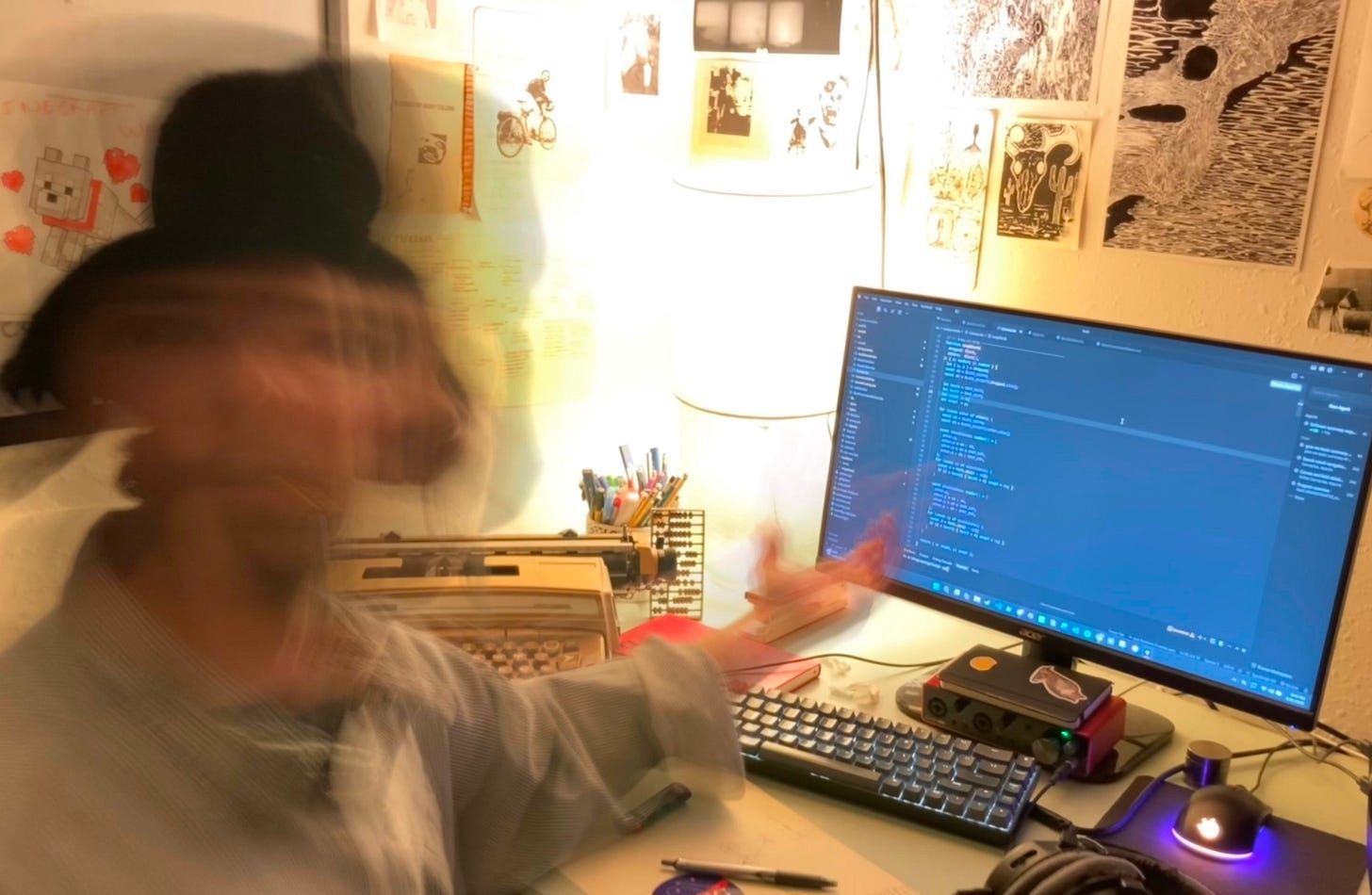
“What are you building?”
“I’m not sure yet but I think it will make sense.”
Code started forming into something I called Field. It became an infinite canvas where I could place notes anywhere. Blocks of text, fragments, labels. You can move things around, group them. An infinite, spatially organized word processor. Not in lines, but in clusters. Things near each other because they felt related.
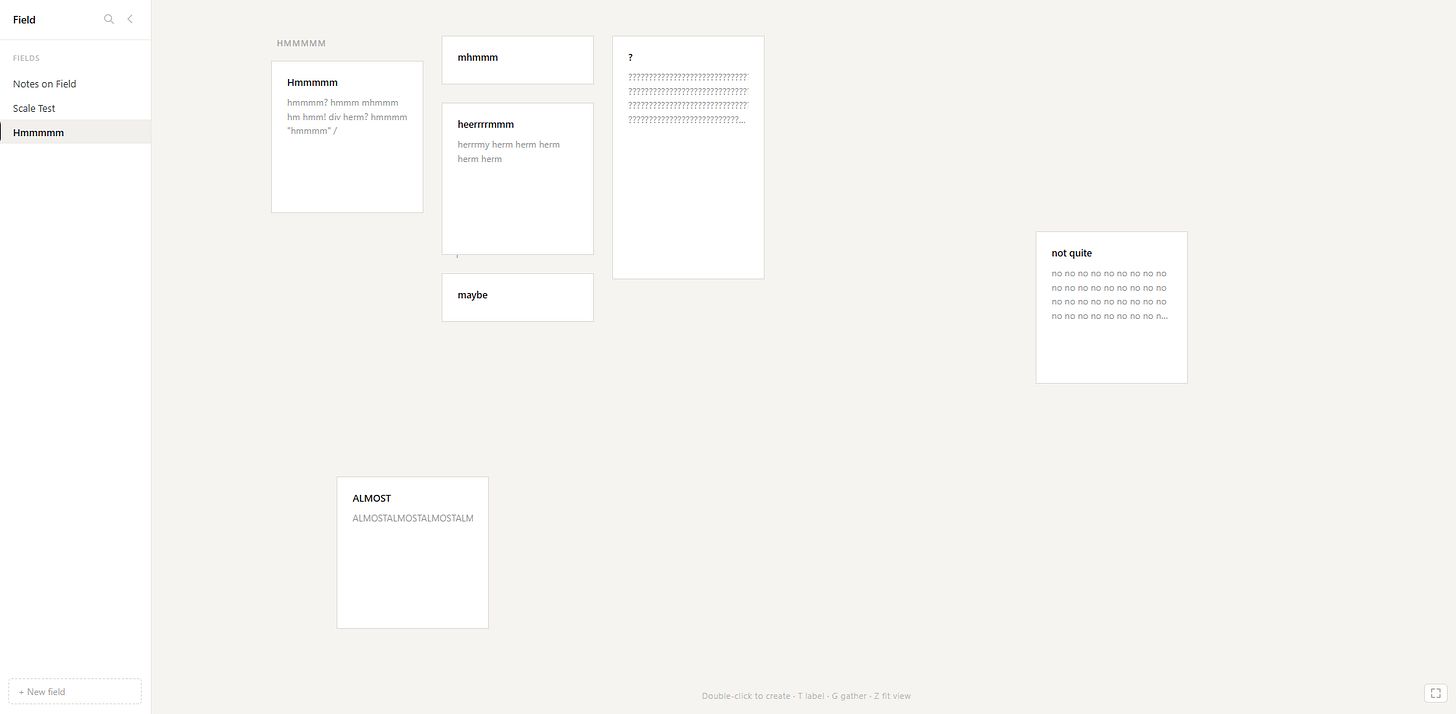
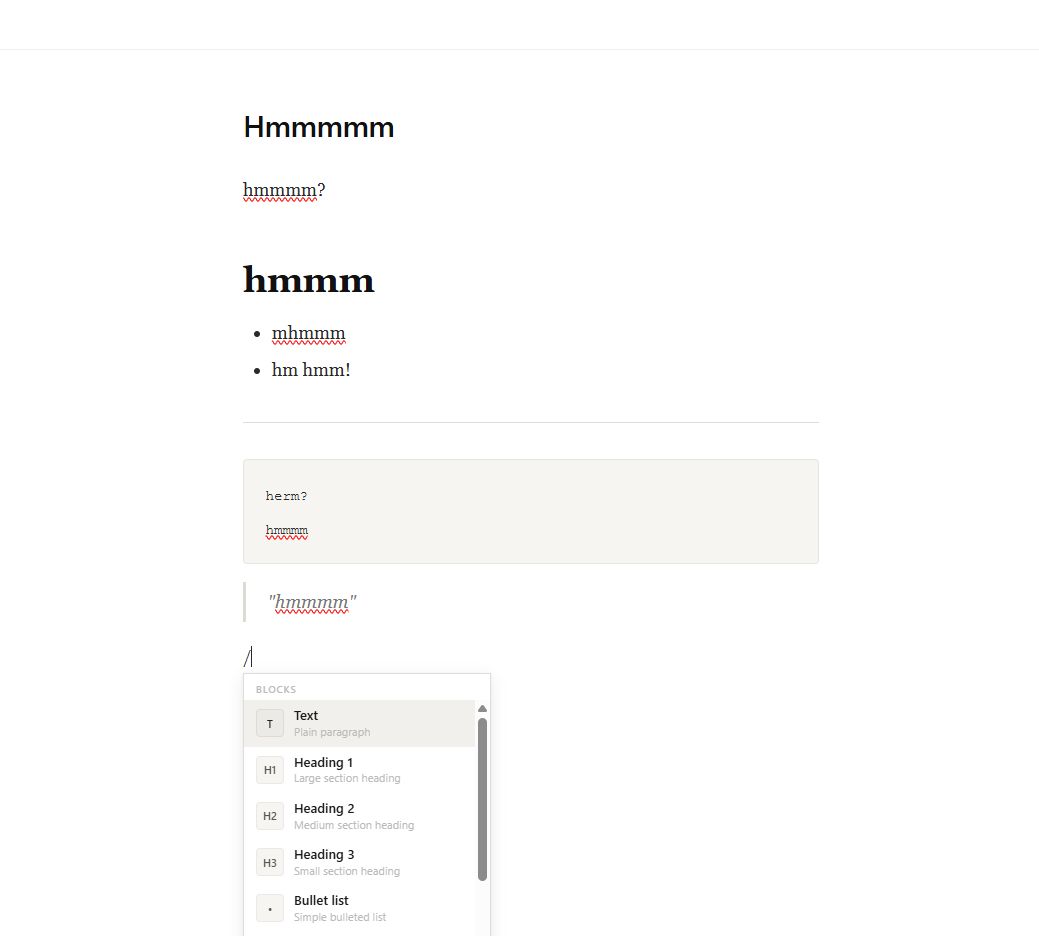
I would sit there moving things around. Placing fragments next to each other. Zooming in and out. It felt like I was getting closer to something. My roommates asked if they could have it for themselves. “No, it’s not ready yet.”
After a while I realized I was just building a more complicated word processor. I hadn’t really changed anything. I just gave myself more space to do the same thing.
I needed something else. The tool wasn’t enough. Maybe it was me.
Maybe I needed to think less like the person on the computer and more like the computer.
In an effort to think like a computer, I started describing a pattern of thought syntactically. More conditionally.
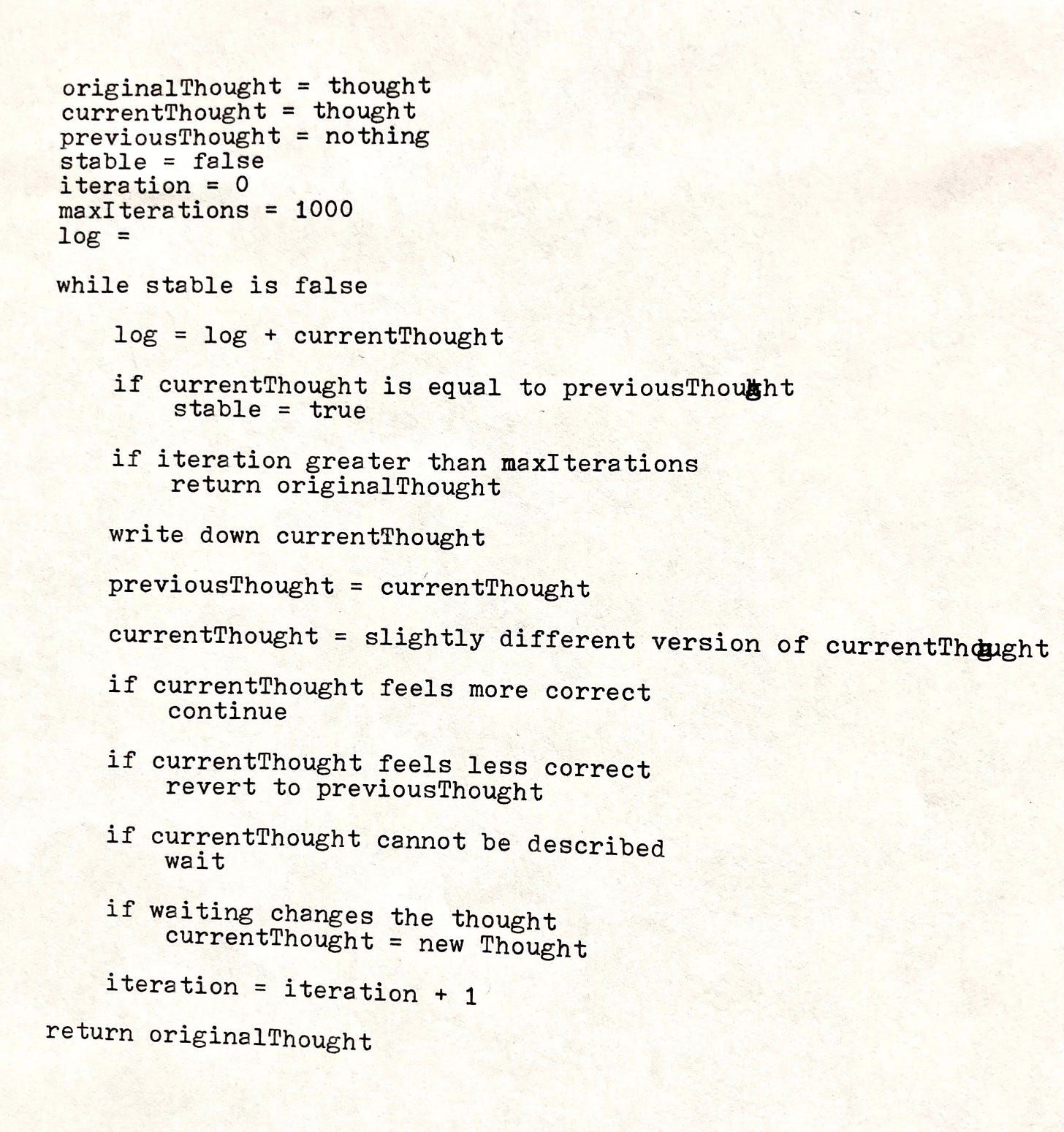
It felt small and linear. It didn’t capture the depth.
I needed more mess. Maybe what I needed was something that didn’t have to turn into words.
Around this time I read The Kekulé Problem by Cormac McCarthy. One of the ideas in it is that language isn’t where thought happens. It’s more like how we report it. The unconscious does most of the work, and by the time something reaches language, it’s already been simplified.
That could be right. It didn’t seem like something that started as words.
So I stopped writing altogether and I started placing objects on the floor.
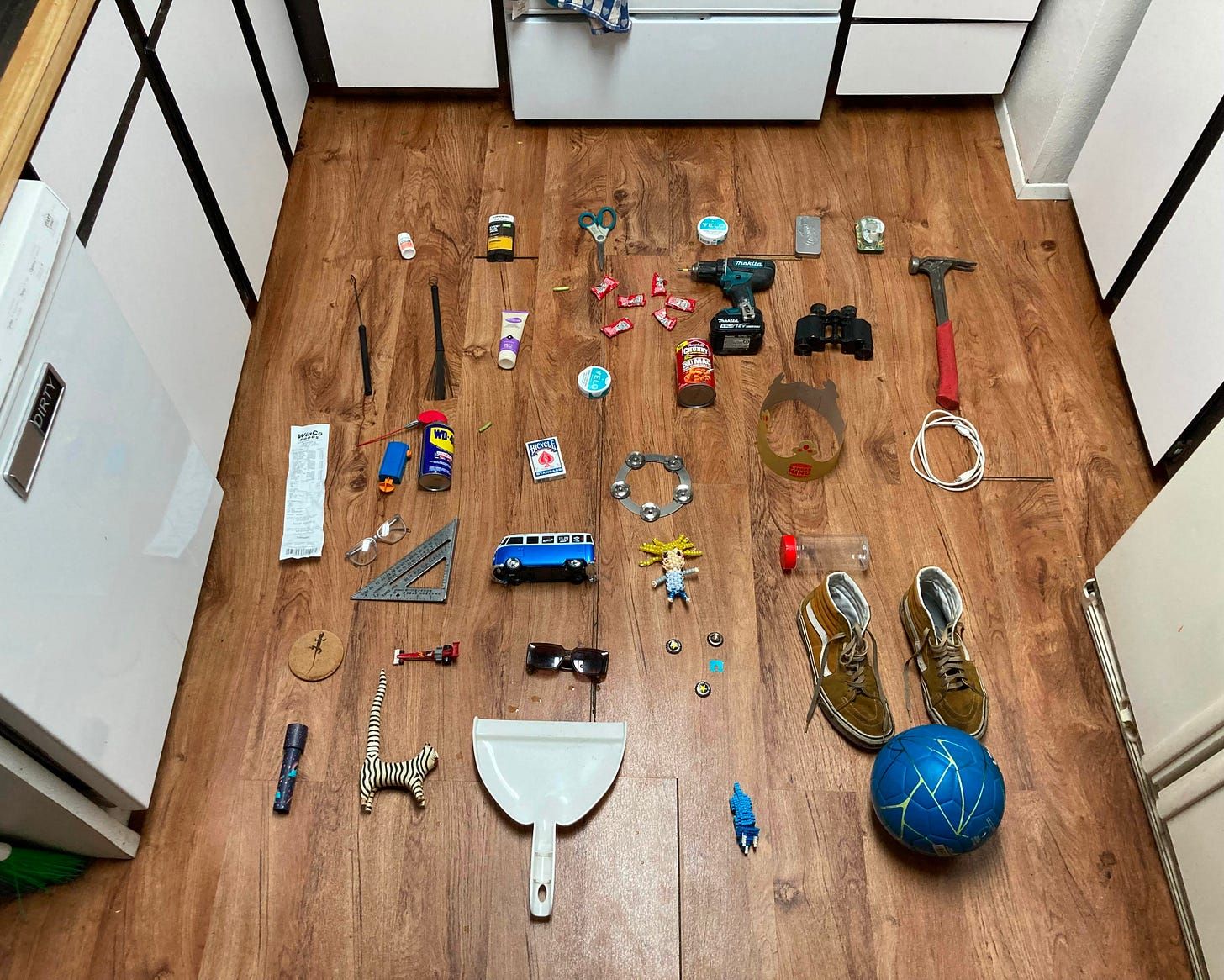
I would move them around until it felt like something had settled. Yes, there is a thought in here. A whole story. I left everything where it was and headed out the door, thinking I might understand it better when I got back.
When I came home it just looked like I had made a mess. My roommates were not pleased.
I stood there for a while trying to remember what any of it meant. But I couldn’t. It felt like I had been working with something that only made sense while it was happening. And the moment I stepped away from it, it turned into something else. Or maybe it was always something else.
I thought about what David Lynch said in Catching The Big Fish.
He talks about ideas like fish. The deeper ones are larger. More abstract.
He says if you expand the container, you can catch bigger fish.
I realized I had been standing in my lake the whole time.
I already had the stillness. The repetition. The space.
The dish pit was expanding.
It wasn’t the tools.